

Residential Tree Care Services
Residential Tree Care Services in San Francisco & the Bay Area
Professional residential tree care focused on safety, property protection, and long-term tree health. Arborist Now provides expert tree removal, pruning and trimming, stump grinding, and emergency services for homeowners throughout San Francisco and the Bay Area — delivered by ISA-certified arborists and fully trained crews. We’ve worked on Bay Area trees since 2010, and we’re licensed (CA 961415), insured, and CTSP-certified for jobsite safety.
How do you know which tree service you need?
Most homeowners call about a specific worry, not a service name. Here is how those worries usually map to the work:
- A tree looks unsafe, is leaning, or dropped a large limb — start with an arborist consultation. It may need pruning, cabling, or removal — that is a judgment call an arborist makes on site, not something to guess at from the ground.
- Branches are touching the house, blocking light, or crowding a walkway — tree trimming or pruning for clearance.
- A tree is dead, dying, or too close to the foundation — removal, usually with stump grinding afterward.
- A storm just came through — emergency service.
- The tree looks sick — thinning canopy, discolored leaves, fungus — plant health care, which is diagnosis rather than cutting.
If you are not sure, that is normal. An assessment costs you nothing but an hour and tells you which of the above you are actually dealing with.
Tree Removal
When safety or property protection calls for it, our team provides safe, efficient tree removal. From hazardous storm-damaged trees to species planted too close to structures, we handle the entire process—including advanced rigging or crane work, and eco-friendly disposal.


Tree Pruning
Proper pruning improves tree structure, reduces risk, and supports healthy growth—especially in residential settings where trees interact closely with homes, walkways, and neighboring properties. Our arborists apply species-appropriate pruning techniques to improve clearance, balance canopies, remove dead or weak limbs, and maintain the natural form of each tree while prioritizing safety and long-term health.
Stump Grinding

Emergency Tree Services
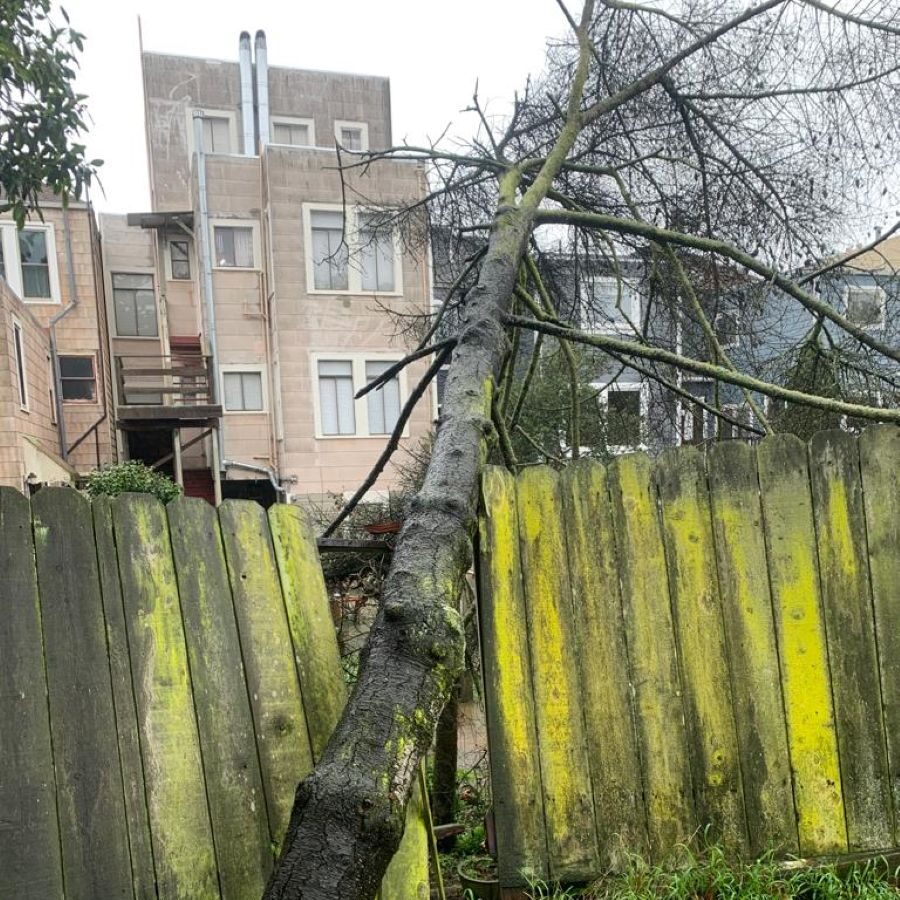
Severe weather, high winds, or sudden tree failure can create urgent safety risks for homes and families. Arborist Now provides responsive emergency tree services for residential properties, addressing fallen trees, hanging limbs, and immediate hazards. Our experienced crews assess the situation quickly and act with precision to stabilize conditions and protect people and property.
What happens when you hire Arborist Now?
1. Assessment. A certified arborist visits the property, evaluates the tree's condition and its surroundings, and tells you what the tree needs — including when the answer is "nothing yet." See arborist consultation.
2. Written estimate. You get the scope, the approach, and the price in writing before any work is scheduled. No verbal-only quotes.
3. Permits, if required. Some trees in San Francisco cannot be pruned or removed without authorization. Permits are the property owner's responsibility, and we will tell you during the assessment if your tree looks like it falls into a regulated category.
4. Site protection. Before cutting starts, we plan access and protect what is around the tree — lawn, hardscape, fences, irrigation, neighboring plantings. In tight San Francisco lots this is most of the work. Ongoing care is covered under landscape maintenance.
5. The work itself. Rigging, climbing, or crane depending on access. Crews follow ANSI A300 standards and CTSP safety protocols.
6. Cleanup and haul-away. Debris removed, chips repurposed as mulch or milled into usable lumber where the wood is worth saving.
Do you need a permit to remove a tree in San Francisco?
Sometimes — and it depends on the tree, not the property.
San Francisco regulates certain categories of trees, including street trees and trees given protected status. For those, removal or significant pruning requires authorization before work begins, and doing the work without it can carry penalties. Trees fully within a private yard and outside those categories generally do not require a permit.
Permits are the property owner's responsibility to obtain. What we can do is tell you during the assessment whether your tree appears to fall into a regulated category, so you are not caught out after the fact. If you want help navigating the process, ask — we are happy to point you in the right direction.
What does residential tree work cost in San Francisco?
Any company quoting a firm price before seeing the tree is guessing. Cost is driven by:
- Size and species. A 60-foot eucalyptus and a 20-foot Japanese maple are different jobs.
- Access. A tree a truck can park beside costs less than one behind a house reachable only by hand-carrying debris through a side gate — common in San Francisco.
- Proximity to structures. Anything within falling distance of a roof, fence, or power line requires rigging or a crane instead of straight felling.
- Condition. Dead or decayed wood is unpredictable and demands slower, more careful technique. A health assessment may be the first step.
- Permits and disposal. Filing requirements and haul-away volume both factor in.
We give you a written estimate after an on-site assessment. That estimate is what you pay.
Why Choose Arborist Now?
ISA-certified arborists on every project
Licensed (CA 961415), insured, and fully trained residential crews
CTSP #03302 — Certified Treecare Safety Professional standards on every jobsite
Working in San Francisco's dense urban and residential environments since 2010
Certified Micro LBE
Eco-conscious disposal, recycling, and urban wood milling
Residential Tree Care Across the Bay Area
Arborist Now provides residential tree care services throughout San Francisco and the surrounding Bay Area. Our team understands the challenges of working in tight residential spaces, varied soil conditions, and urban tree environments common to the region. Homeowners rely on us for professional guidance, safe execution, and dependable results.
Residential Tree Care FAQs
How often should residential trees be pruned?
Most mature trees benefit from pruning every 3–5 years. Young trees benefit from structural pruning more often — every 2–3 years — because early shaping prevents expensive problems later.
What is the difference between tree trimming and tree pruning?
In practice they are used interchangeably. Trimming usually refers to cutting for clearance and appearance; pruning refers to cuts made for the tree’s structure and health. Most residential jobs involve both.
When is the best time of year to prune?
Late winter through early spring for most species, when trees are dormant and wounds close faster. Dead, damaged, or hazardous limbs should be removed whenever they are found, regardless of season.
Do you work on trees near power lines?
Trees contacting utility lines require coordination with the utility. We assess the situation and advise on the right path rather than putting a crew at risk.
Can you save a tree that looks like it is dying?
Often, yes — if the cause is treatable and caught early. Thinning canopy or leaf discoloration can indicate soil, water, pest, or disease issues, all of which plant health care may address. An assessment determines whether the tree is recoverable.
Ready to care for your trees?
Contact us today for a residential tree consultation and expert guidance from certified arborists.