

Residential Tree Removal in San Francisco
Residential tree removal planned for Bay Area homes, with careful control around roofs, fences, gardens, neighboring properties, and tight access.
Residential Tree Removal in San Francisco and the Bay Area
Most homeowners do not call about a tree until something changes. A large limb falls across the driveway, the tree leans farther than it did last winter, or damage appears near the trunk or roots.
Arborist Now has removed trees from Bay Area residential properties since 2010. During the free initial consultation, an ISA-certified arborist evaluates the tree, available access, and its surroundings. If removal is necessary, the work is planned around the home, fences, gardens, utilities, and neighboring property. If the tree can reasonably be retained through pruning or plant health care, we will explain that option instead.
If removal is not the right answer, review our residential tree care services for pruning, plant health, and other options.
When a Tree May Need to Come Down
Removal is the last option, not the first. Some trees can be retained through pruning, support systems, or plant health care. Removal may be the responsible choice when:
The tree is dead. Dead limbs and trunks continue to lose strength, increasing the chance of failure and making the tree more difficult to remove safely over time.
The tree has a structural problem. Warning signs can include decay at the base, a split between major trunks, a changing lean, or roots damaged by excavation.
A storm caused major damage. A broken main stem, lifted root plate, or large hanging limb may leave the tree unable to remain stable.
The tree is damaging the property. Some trees outgrow the space in which they were planted and begin affecting a foundation, sewer line, roof, fence, or neighboring property.
Corrective work cannot reduce the risk enough. When repeated pruning or support work cannot provide a reasonable long-term result, removal and replacement may be the better option.


Our Residential Tree Removal Process
Every removal begins with the tree, the property, and the available access. The plan should be clear before cutting starts.
Free Initial Consultation and Planning
An ISA-certified arborist reviews the tree’s condition, nearby structures, access limitations, and the safest practical removal method. This initial consultation is free. A formal Arborist Consultation for reports or professional documentation is a separate paid service.
Permits Check
Permit requirements depend on the location and status of the tree. We can flag when local authorization may apply so the property owner can address it before work is scheduled.
Property Protection
Before work begins, the crew plans access and identifies the roofs, fences, hardscape, irrigation, plantings, and neighboring property that need protection.
Controlled Removal
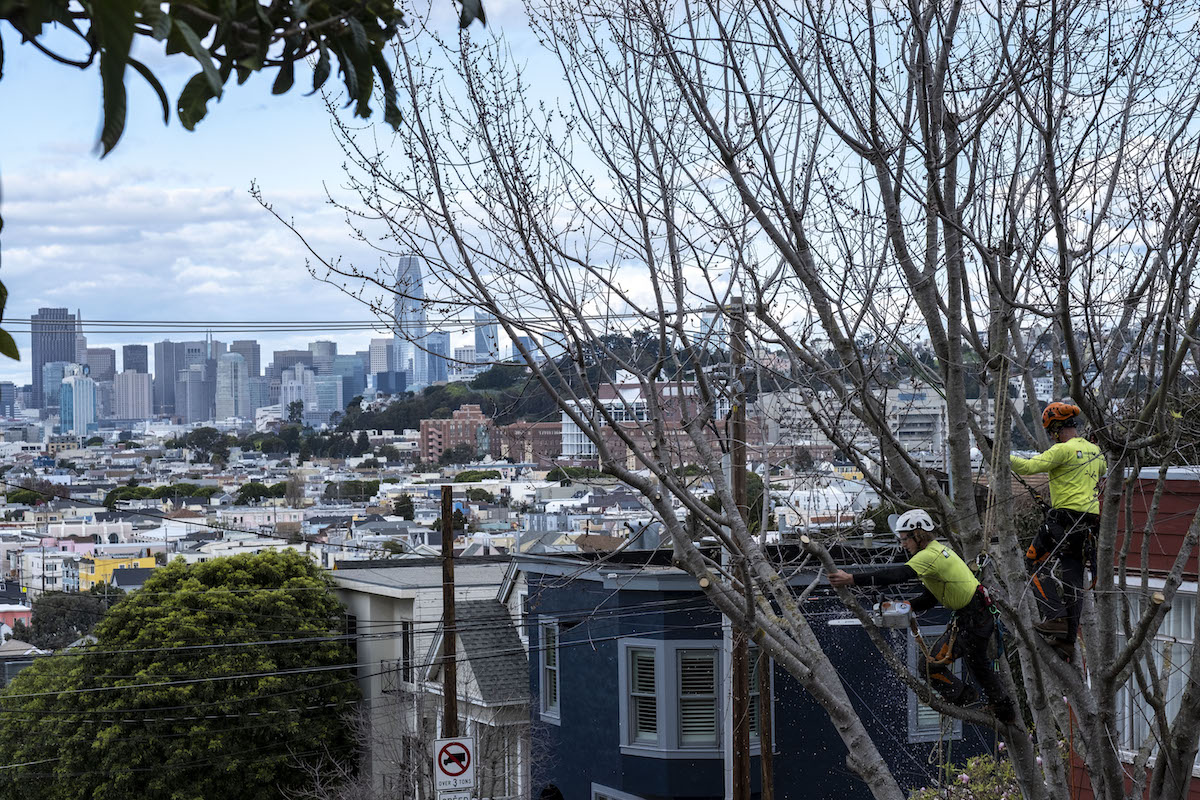
The tree may be dismantled in sections using climbing, rigging, or crane support, depending on its size, condition, and location. The method is selected for the site rather than applied as a standard approach to every tree.
Cleanup & Next Steps
Branches and debris are removed from the work area. Wood may be chipped, hauled away, or considered for milling when its size, species, and condition make that practical. Stump grinding can be included in the project or scheduled separately.
Why Homeowners Choose Arborist Now
ISA-certified arborists involved in residential removal planning
CA License 961415, insured crews, and CTSP #03302
Bay Area tree-removal experience since 2010
Removal methods planned for homes, tight access, and neighboring property
Frequently Asked Questions
Do I need a permit for residential tree removal?
Permit requirements depend on the city, the tree’s location, and whether it has protected status. San Francisco rules can differ for street trees and other regulated trees. During the free initial consultation, we can flag when a permit may apply. The property owner is responsible for obtaining required authorization before removal.
How much does residential tree removal cost?
Cost depends on the tree’s size and condition, access to the property, nearby structures, the removal method, debris handling, permit requirements, and whether stump grinding is included. The free initial consultation lets us assess those conditions and prepare a written estimate for the proposed work.
Can you remove trees in tight spaces near homes or fences?
Yes. Trees near homes, fences, gardens, and neighboring property are commonly removed in sections rather than felled in one piece. Depending on the site, the crew may use climbing, rigging, or crane support to control each section.
What happens to the wood after removal?
The answer depends on the species, size, condition, and access. Wood may be chipped for mulch, hauled away, or considered for Arborist Now’s urban wood program when it is suitable for milling.
Do you offer stump grinding after tree removal?
Yes. Stump grinding can be included with the removal or scheduled separately. The appropriate depth and cleanup plan depend on how the area will be used afterward.
Start with a free initial consultation. An ISA-certified arborist will review the tree, the property, and the available access before recommending removal.